Investment | $1 million |
|---|---|
The Company | YieldX (Formerly GAIA Projects Australia) |
The University Partner | La Trobe University Eagle Fund |
Innovation Victoria | $500,000 |
Eagle Fund | $500,000 |
Other Investors in the Round | Mandalay VC, Hugh Victor McKay Fund |
YieldX: Supported by Breakthrough Victoria and LaunchVic
YieldX (Formerly Gaia Project Australia) is a Melbourne-based company specialising in agricultural technology (AgTech) to future-proof food security. Founded in 2020 by engineer and innovator Nadun Hennayaka, YieldX focuses on sustainable farming solutions for both Earth’s agriculture and space exploration. The company’s cutting-edge technology is designed to increase efficiency in Controlled Environment Agriculture (CEA), a farming method poised to revolutionise food production.
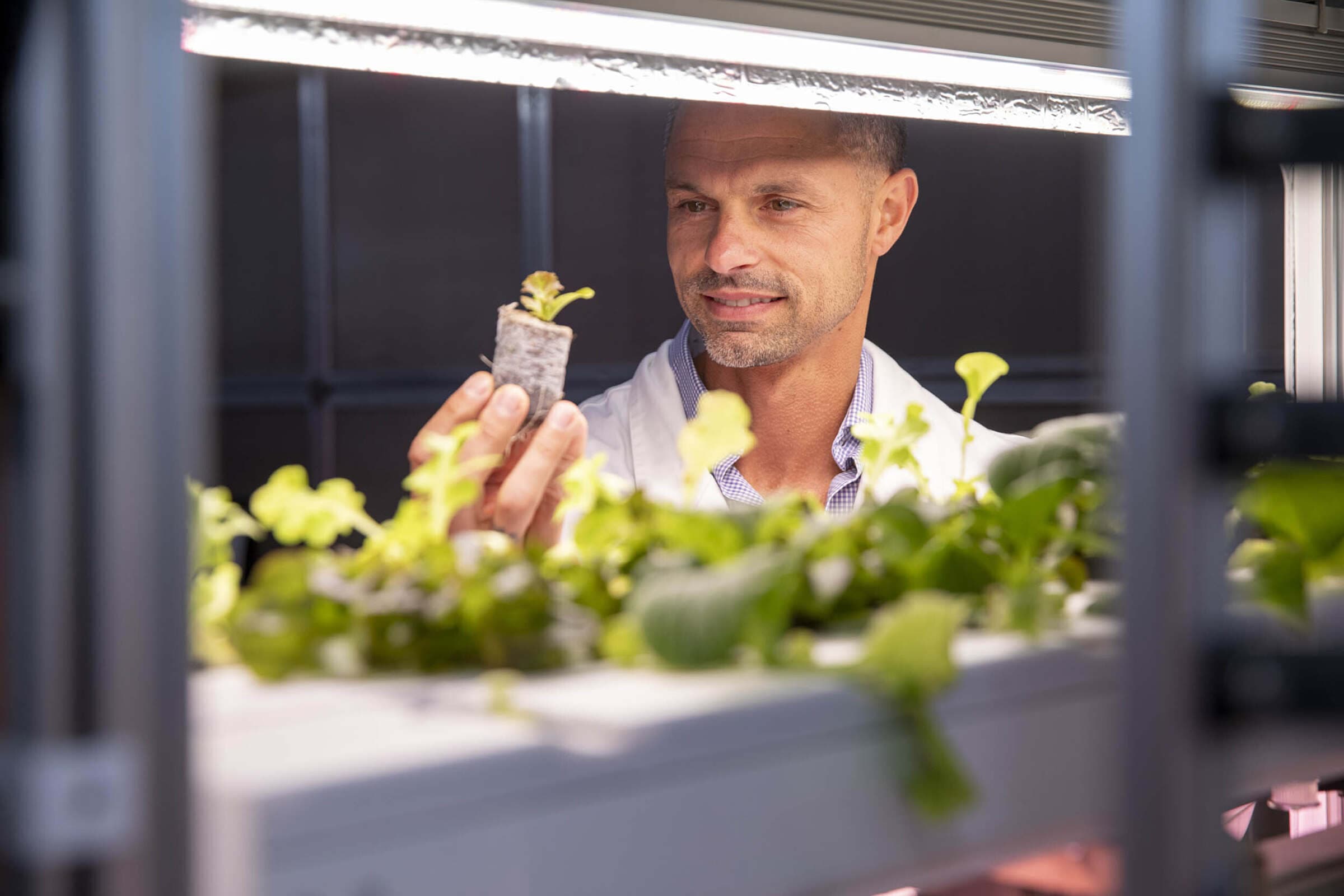
YieldX has developed a patented technology called the Omni-System
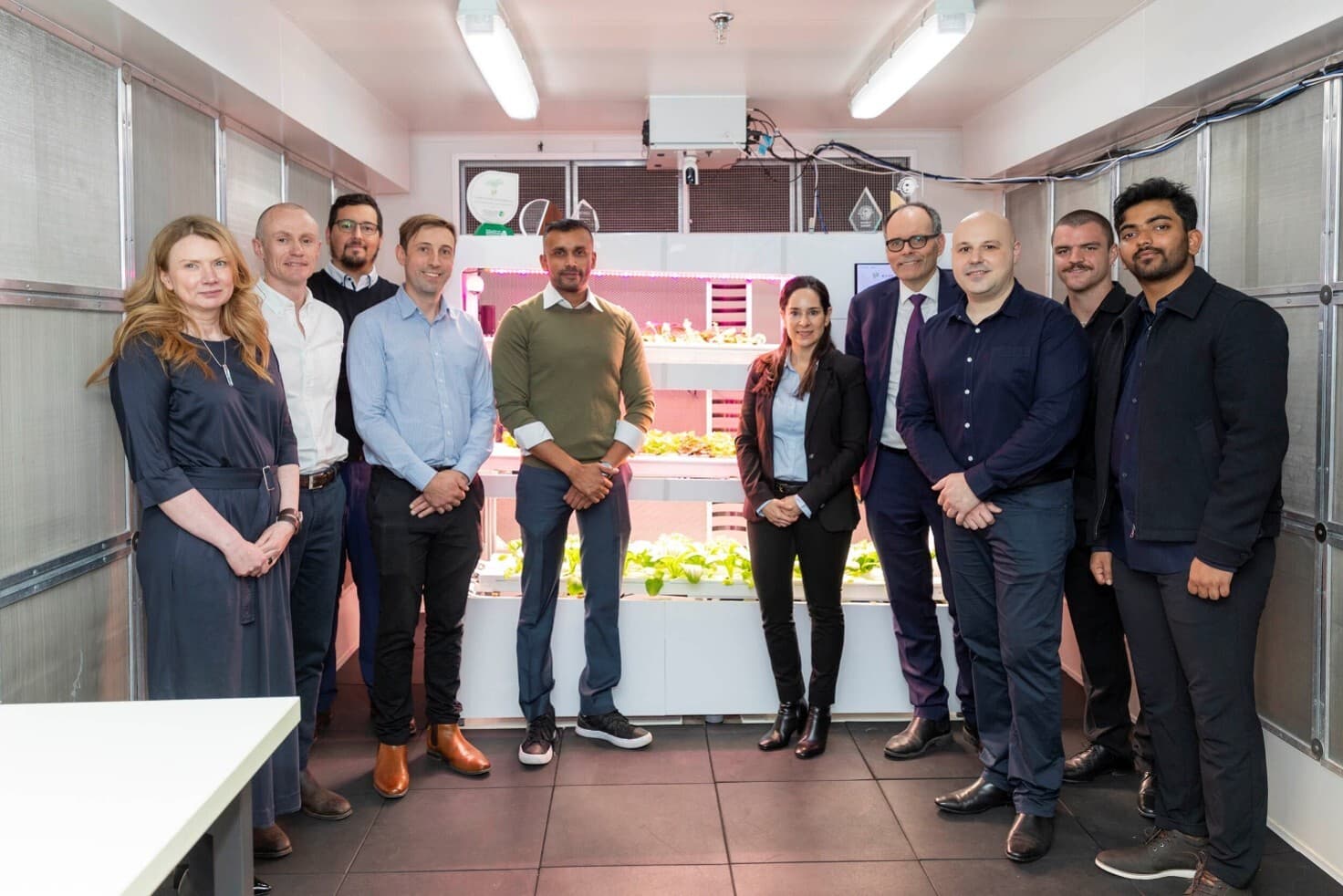
The Yield X Team With Investors
The Problem
With growing climate and cost pressures, and the rising global demand for sustainable food, the shift to Controlled Environment Agriculture (CEA) has been slow. Traditional CEA systems often rely on fixed plant spacing or require expensive and complex robotic adjustments, limiting scalability and efficiency. The challenge lies in creating a system that maximizes yield while remaining cost-effective and adaptable.
The Solution
YieldX has developed a patented technology called the Omni-System, which dynamically adjusts plant spacing in real time. Unlike traditional CEA systems, which maintain fixed spacing or require costly adjustments, the Omni-System allows young plants to grow in a more compact area, then gradually increases spacing as they mature. This innovative approach can boost leafy green vegetable yields by up to 40% without requiring expensive robotics or intricate workflow systems prone to failure.
YieldX’s advancements extend beyond Earth. Alongside La Trobe University, the company was a finalist in NASA’s Deep Space Food Challenge, designing a system to grow food for long-duration space missions, including the Artemis missions to the Moon and Mars. Their prototype demonstrated a 40% increase in leafy green production compared to existing CEA technologies.